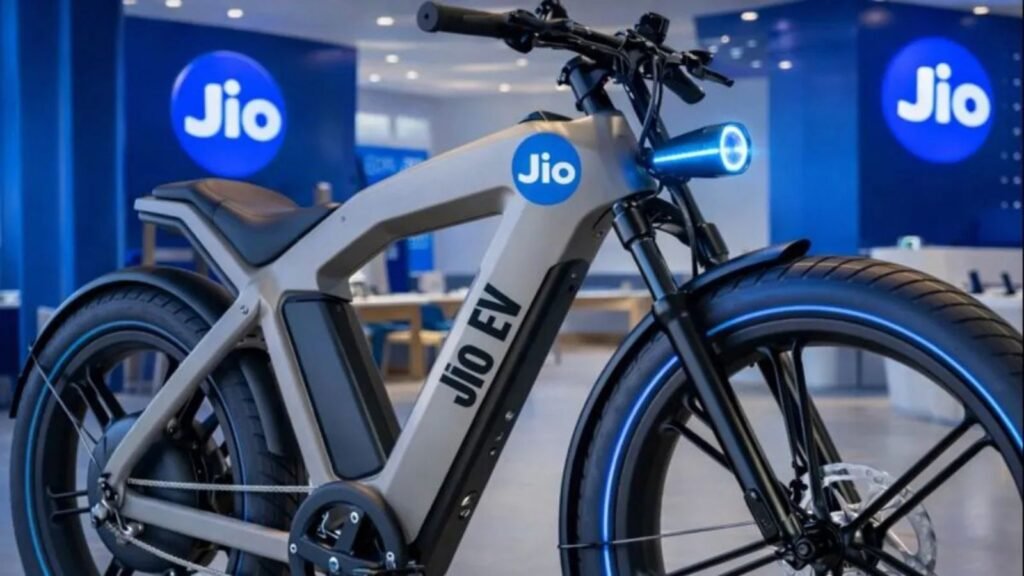
The idea of affordable electric mobility is no longer limited to cars and scooters. In recent months, the Jio Electric Cycle has become a major talking point among Indian families, especially middle-class parents looking for a safe, economical, and future-ready travel option for their children. With rising petrol prices, crowded public transport, and increasing daily travel needs, a simple electric cycle feels like a practical solution rather than a luxury.

What makes the Jio Electric Cycle stand out is how closely it connects with real Indian lifestyles. Students commuting to school, tuition, or college, office-goers covering short daily distances, and even parents running small errands are all searching for a vehicle that costs less, runs cheaper, and does not involve heavy EMIs or complex paperwork. The promise of a 155 km claimed range, 25 km/h top speed, and a ₹4,999 down payment immediately grabs attention because it feels achievable for average households.
With the trusted name of Jio attached to it, expectations are naturally high. People associate the brand with affordability, mass reach, and services designed for common users rather than niche buyers. That trust plays a big role in why the Jio Electric Cycle is already being discussed as a potential everyday mobility revolution.
Why the Jio Electric Cycle Fits Perfectly into Middle-Class Life
Middle-class families think carefully before buying any vehicle. The purchase is not about style or speed but about long-term savings, safety, and durability. The Jio Electric Cycle appeals directly to this mindset. Unlike petrol scooters or motorcycles, it avoids fuel expenses, insurance hassles, registration complexity, and rising maintenance costs.
Parents often hesitate to give teenagers petrol-powered two-wheelers due to safety concerns and expenses. An electric cycle, especially one with a controlled top speed, feels like a safer stepping stone. The Jio Electric Cycle offers enough speed for city use without encouraging risky riding behaviour. At the same time, it gives young riders independence and confidence.
For working adults, the Jio Electric Cycle works well as a secondary vehicle. Short office commutes, market visits, or railway station trips become easier without worrying about fuel bills or traffic fines. Over months and years, the savings become visible, which is exactly what middle-class buyers care about most.
Simple, Strong Build Designed for Indian Roads
Indian roads are unpredictable. Potholes, broken patches, speed breakers, and uneven surfaces are common, especially in residential areas and smaller towns. That is why the Jio Electric Cycle focuses more on a strong, practical build rather than flashy design elements.
The expected frame is designed to handle daily stress without bending or rattling. A sturdy front fork helps absorb minor shocks, while slightly wider tyres improve balance and grip. This matters a lot for students riding early in the morning or during monsoon seasons. Stability builds confidence, especially for new riders.
Seat comfort is another area where the Jio Electric Cycle seems to focus on real needs. Many users will ride it for 20 to 40 minutes daily. A well-padded seat and upright riding posture reduce back and shoulder strain. This design choice makes the electric cycle usable not just for children but also for adults of different age groups.
Durability matters more than looks in this segment. Middle-class buyers prefer something that lasts long and does not require frequent repairs. A simple, solid design ensures that the Jio Electric Cycle stays economical even after years of use.
Range and Battery Performance That Reduce Daily Worry
Range anxiety is one of the biggest concerns in electric mobility. The Jio Electric Cycle addresses this directly with a claimed range of around 155 km on a single charge. Even if real-world conditions reduce this number, the practical range is still more than enough for daily use.
For a student travelling 8 to 10 km per day, the Jio Electric Cycle could run for a full week or more without charging. Office-goers covering slightly longer distances can still manage multiple days comfortably. This reduces the mental stress of daily charging and makes ownership easier.
Charging convenience is another strong point. The Jio Electric Cycle can be charged using a regular household power socket, eliminating the need for special charging infrastructure. A full charge time of around 4 to 6 hours fits easily into overnight charging routines. Plug it in after dinner and it’s ready by morning.
Battery quality will play a crucial role in long-term satisfaction. A reliable lithium-ion battery with proper warranty coverage can make the Jio Electric Cycle a worry-free investment. Since the battery is the most expensive component, buyers will naturally focus on durability and service support.
Controlled Speed That Matches City and Colony Roads
Speed is not everything, especially for daily commuting. The Jio Electric Cycle is expected to have a top speed of around 25 km/h, which is ideal for city lanes, residential colonies, and school routes. This speed keeps the ride calm, controlled, and predictable.
For parents, this controlled speed offers peace of mind. They know their children are not riding something that encourages racing or risky behaviour. For adult riders, the smooth acceleration and steady speed are more comfortable in traffic than sudden bursts of power.
Flyovers, bridges, and mild inclines test motor strength more than top speed. The Jio Electric Cycle focuses on smooth torque delivery rather than aggressive performance. This ensures that riders can climb slopes comfortably without stressing the motor or battery.
In everyday Indian conditions, a balanced and stable ride matters far more than high-speed capability. This is where the Jio Electric Cycle aligns perfectly with real usage patterns.
Everyday Features That Actually Matter to Users
Many electric vehicles fail because they focus on unnecessary features instead of practical ones. The Jio Electric Cycle keeps things simple and functional. A basic digital display showing battery level, speed, and assist mode is enough for most riders.
Front and rear lights are essential for early morning and evening rides. Good visibility increases safety, especially in areas with poor street lighting. Reflectors and audible alerts further improve road presence.
Security is another concern for users. A battery lock and basic anti-theft measures help protect the most valuable component. Warranty coverage on the motor and battery adds confidence, especially for buyers who are new to electric mobility.
Service access is often overlooked but extremely important. The success of the Jio Electric Cycle will depend heavily on service availability in small cities and towns. Easy access to spare parts and support ensures that ownership remains stress-free.
Pricing Strategy That Makes Sense for Middle-Class Buyers
Price is where the Jio Electric Cycle truly makes its mark. An expected price range between ₹24,999 and ₹39,999 places it within reach of a large section of Indian families. This pricing feels realistic rather than aspirational.
The option of a ₹4,999 down payment with low monthly EMIs further reduces the entry barrier. For many households, this is easier to manage than a large one-time expense. Parents see it as an investment in their child’s daily mobility and safety.
Running costs are extremely low. Charging the Jio Electric Cycle costs only a few rupees per session, especially compared to daily petrol expenses. Over a year, the savings become significant. This is why many families see electric cycles as smarter alternatives to autos, buses, or even scooters.
Ideal Use Cases for the Jio Electric Cycle
The Jio Electric Cycle fits into multiple daily scenarios:
-
School and college commuting
-
Tuition and coaching classes
-
Office travel within city limits
-
Short errands and market visits
-
Fitness rides with electric assistance
Its versatility makes it suitable for different age groups and lifestyles. Unlike petrol vehicles, it does not feel intimidating or costly to maintain.
Long-Term Ownership and Savings Perspective
One of the biggest advantages of the Jio Electric Cycle is long-term savings. There is no fuel cost, minimal maintenance, and fewer mechanical parts to fail. Over three to five years, the total cost of ownership remains significantly lower than petrol-based alternatives.
For middle-class families who track expenses carefully, this matters a lot. The Jio Electric Cycle does not just save money—it simplifies daily life. No fuel queues, no price fluctuations, and no frequent service visits.
Final Thoughts: A Practical Step Toward Smarter Commuting
The Jio Electric Cycle is not about luxury or performance bragging. It is about practicality, savings, and suitability for everyday Indian life. If real-world performance matches the claimed specifications, this electric cycle could become a common sight across cities, towns, and residential colonies.
For students, it offers independence without risk. For parents, it provides peace of mind. For daily riders, it delivers consistent savings and ease of use. That balance is what makes the Jio Electric Cycle such an appealing option.
In a country where small daily costs add up quickly, choosing the right mode of transport matters. The Jio Electric Cycle represents a thoughtful, affordable, and future-ready solution for middle-class India—one that prioritizes real needs over flashy promises.